History of King Edward VII Lodge No.3252
The Founding of King Edward VII Lodge
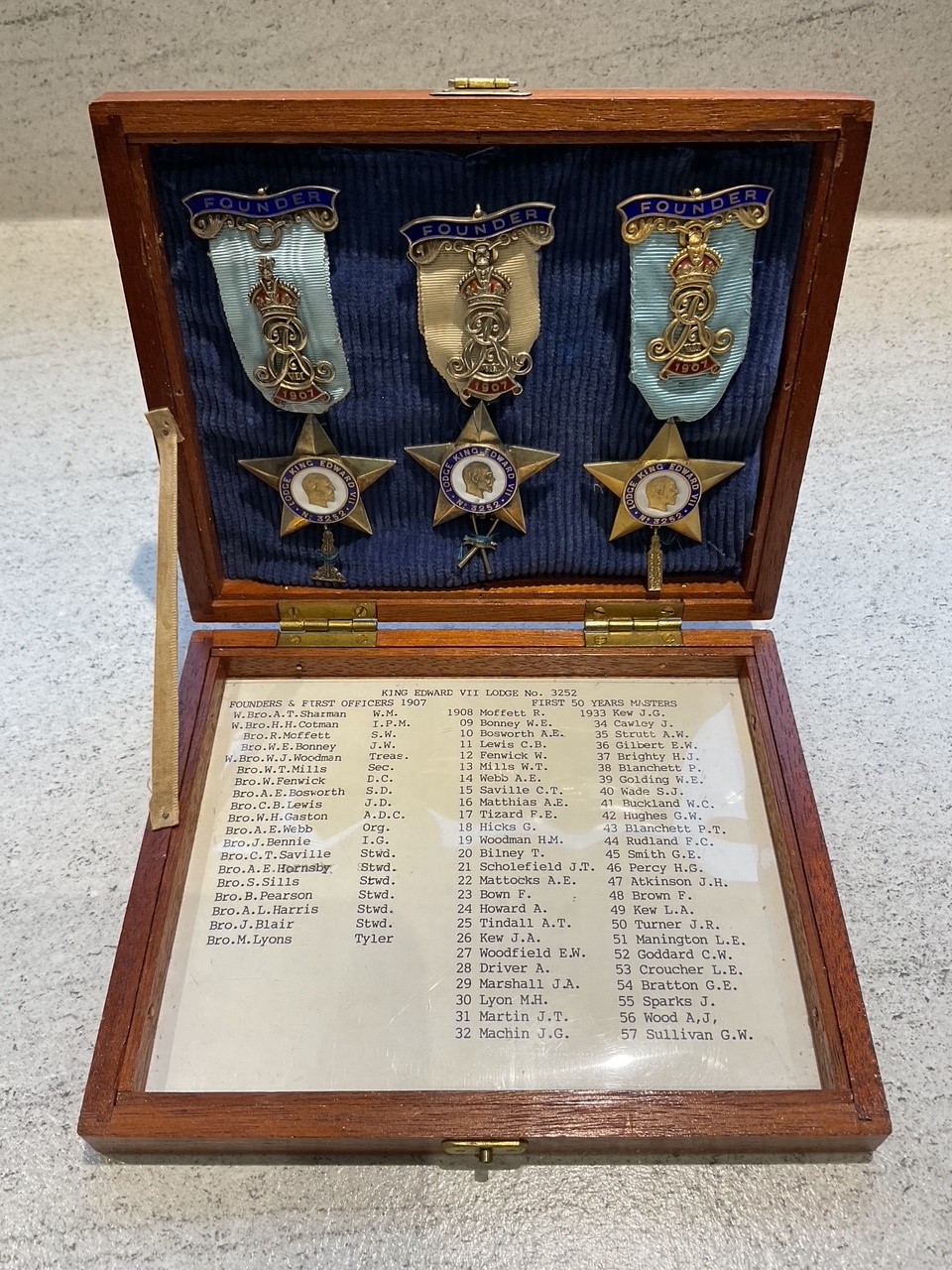
The conception of King Edward VII Lodge No. 3252 began in June 1907, prompted by overcrowding and limited advancement opportunities in the Lord Charles Beresford Lodge. A group of Freemasons, led by W. Bro. A.T. Sharman and Bro. E. Bosworth, met to form a new lodge.
After overcoming initial resistance and procedural delays, the founders secured support from the Pentangle Lodge and finalized the list of officers and founders. The lodge was named in honor of King Edward VII, with fees and subscriptions set for members.
The consecration took place on October 30, 1907, at the Masonic Hall in Chatham, Kent. The ceremony was conducted by the Provincial Grand Master, Rt. W.Bro F.S.W. Cornwallis, and attended by prominent provincial officers, founders, and over 120 guests. W.Bro. A.T. Sharman was installed as the first Worshipful Master, and a full slate of officers was appointed. The lodge began with 37 founders, though 13 resigned or were excluded within the first five years.
Growth and Early Years
The lodge quickly grew in both numbers and character, reaching 95 members by its tenth installation. Meetings were held regularly, with the first initiate being H.M. Woodman, who later became Worshipful Master. The Lodge of Instruction was established in 1908, meeting twice monthly until World War I interrupted activities. Many members served in the military, and attendance fluctuated during the war years.
The lodge was active in charitable work, purchasing a piano for the hall, supporting local hospitals, and contributing to Masonic charities. The death of King Edward VII in 1910 and the outbreak of World War I marked periods of mourning and reduced activity. Despite these challenges, the lodge maintained its traditions and continued to initiate new members.
Interwar Period and Community Engagement
After the war, the lodge resumed its activities with renewed vigor. It supported the establishment of new lodges, amended its by-laws to improve candidate selection, and continued its charitable efforts, including donations to hospitals and Masonic institutions. Social events, such as Ladies Festivals and summer outings, became popular traditions.
The lodge also fostered relationships with other lodges through joint meetings and shared ceremonies. The presentation of a sword by W.Bro. Fenwick, acquired under unique circumstances during World War I, became a notable event. The lodge’s membership steadily increased, reaching 188 by its twentieth installation.
The Impact of World War II
World War II had a significant impact on the lodge. Meetings were disrupted, attendance dropped, and the lodge adapted by holding meetings on Sundays and adjusting its schedule to conserve resources. Despite the challenges, the lodge continued its charitable work, including substantial donations to Masonic festivals.
After the war, the lodge experienced a period of quiet reflection as the country recovered. Membership declined slightly, but the lodge maintained its traditions and continued to honor its members, both living and deceased. Installation meetings were sometimes held at alternative venues due to logistical challenges.
Postwar Developments and Modernization
The postwar years saw the lodge adapt to changing times. It celebrated significant anniversaries, honored long-serving members, and updated its by-laws to reflect modern practices. The lodge moved its meeting venue from Manor Road to Howard Hall in 1988, following a vote by the membership.
The lodge continued to support charitable causes, both locally and within the broader Masonic community. It welcomed visitors from other lodges, including international guests, and maintained a strong tradition of hospitality and fellowship. The lodge also embraced new traditions, such as the Christmas festive board with members’ families.
The Centenary and Legacy
The centenary of King Edward VII Lodge was celebrated on October 30, 2007 at the Franklin Masonic Centre. The Provincial Grand Master, accompanied by other provincial officers, presided over the event. The history of the lodge was recounted, and a centenary warrant was presented. The lodge marked the occasion with a significant charitable donation and a festive board attended by members and guests.
Throughout its history, the lodge has been led by a succession of dedicated officers, including secretaries, treasurers, and worshipful masters. The lodge’s records reflect a commitment to tradition, charity, and the values of Freemasonry. Despite fluctuations in membership and external challenges, King Edward VII Lodge has remained a vibrant and active part of the Masonic community in Kent.
Key Themes and Contributions
- Founding Principles: The lodge was established to provide opportunities for advancement and fellowship among Freemasons in the Medway Towns.
- Charitable Work: Consistent support for hospitals, Masonic charities, and local causes has been a hallmark of the lodge.
- Adaptation and Resilience: The lodge has weathered two world wars, economic changes, and shifts in membership, adapting its practices while maintaining core traditions.
- Community and Fellowship: Social events, joint meetings, and international connections have fostered a strong sense of community.
- Leadership and Service: The lodge has benefited from the dedication of its officers and members, many of whom served for decades.
Summary
King Edward VII Lodge No. 3252’s history is one of resilience, service, and fraternity. From its founding in 1907 through its centenary in 2007, the lodge has played a significant role in the Masonic and local community, upholding the values of Freemasonry and adapting to the changing times. Its legacy is reflected in the enduring bonds among its members and its ongoing commitment to charity and fellowship.